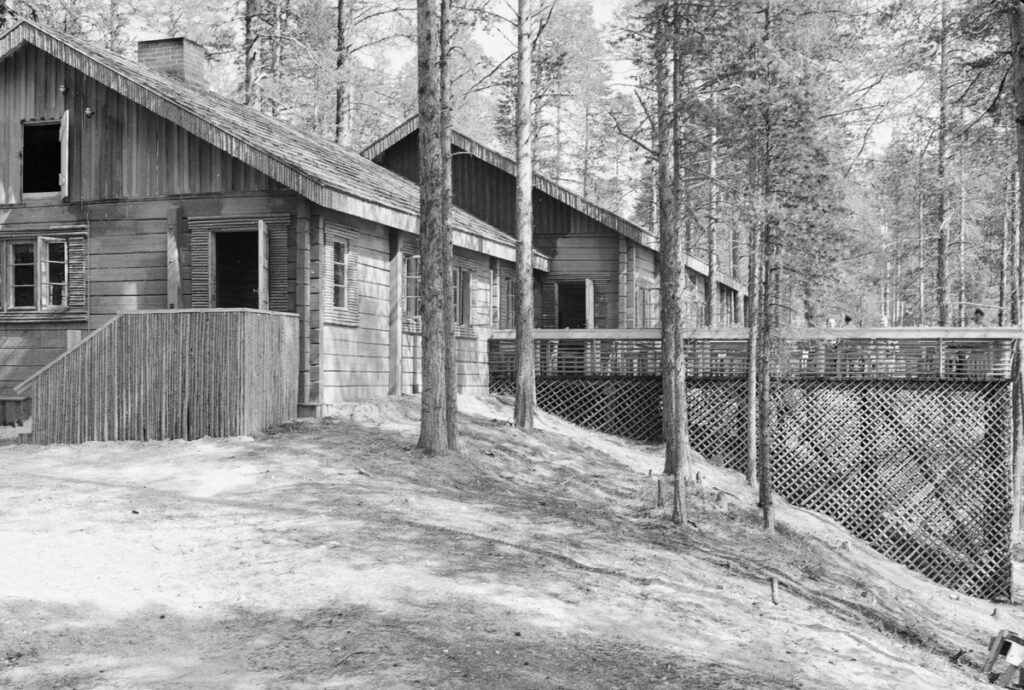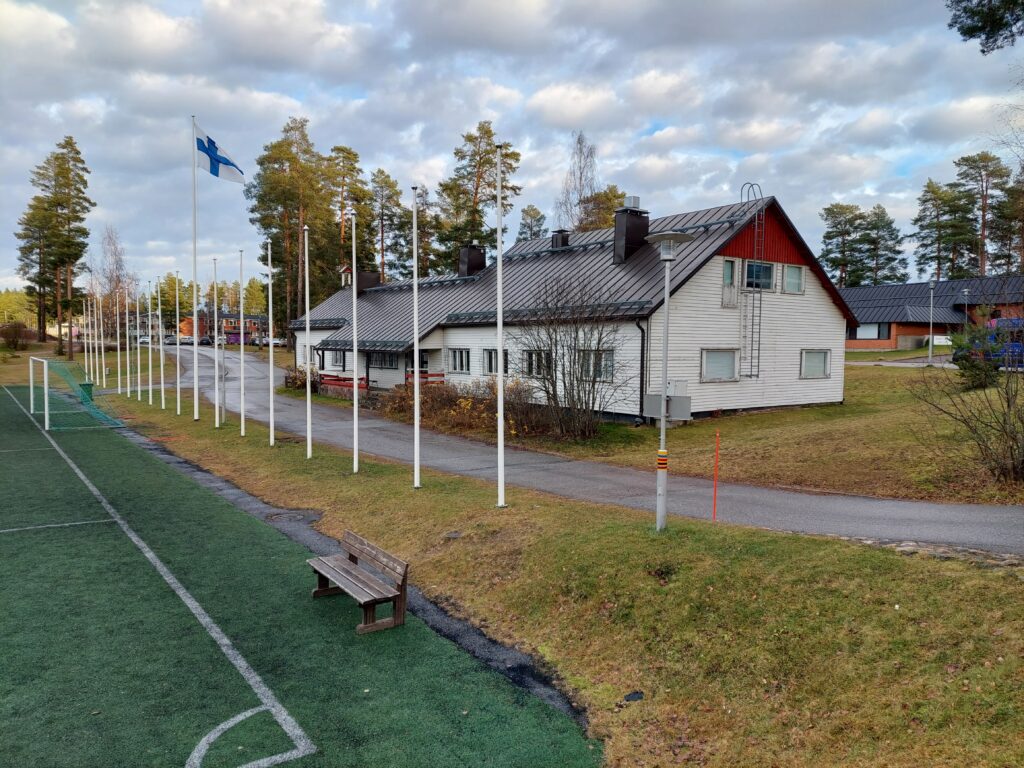
At the prime location of the Vuokatti-Jukola Competition Centre stands an old wooden building in need of a little refurbishment. On its gable end is an outdated version of the sports institute’s logo. What exactly is this building? It looks very different from the rest of the institute’s modern facilities.
The history of that building forms the very first chapter in the story of the Vuokatti Sports Institute. The vaara hill terrain of Vuokatti has always been nearby as a potential orienteering terrain, but without the sports institute, an event on the scale of the Jukola Relay would not be possible.
The institute’s history can be traced back to a night during the Continuation War in March 1943 on the ice of a lake behind the front line at Rukajärvi.
A Finnish military unit was returning home from a long-range reconnaissance mission. The unit was large, numbering more than 500 men. One platoon was ambushed by the enemy while crossing the frozen lake. Many lost their lives, and only the fittest skiers managed to survive. One of those survivors was Paavo Lonkila.
Among the men who returned home were several athletes, as only exceptionally fit men had been selected for the mission. A few days later, amidst the grief, the survivors made a promise to one another – they would never forget that frozen lake.
Headquarter building evacuated from Rukajärvi
When peace returned, the men decided to establish a sports institute somewhere in Finland, with a particular focus on training outstanding skiers. Several locations were considered. According to the story, Hyvinkää’s Sveitsi area would have been a good location, but the final choice fell on the lichen-covered pine forests by Lake Särkinen in Sotkamo, at the foot of Vuokatinvaara. The site was somewhat remote, but the railway line that already ran nearby helped tip the scales.
The pine forests and spruce-covered vaara hills offered magnificent skiing terrain, but a sports institute also needed buildings. Despite the post-war shortages, a solution was found.
Towards the end of the war, several log-built headquarters buildings had been evacuated from the Rukajärvi front and stored in Kuhmo. Permission was granted to move the timber to Vuokatti to serve as the first buildings of the new sports institute. The largest of them became the institute’s main building.
That former headquarters building of General Raappana will therefore not be demolished, especially as it is now a protected building. In its second life it served for many years as the institute’s main building, and the institute’s administration still operates there today. The building also houses a small museum exhibition.
And what about Sergeant Paavo Lonkila, who survived the crossing thanks to his skiing skills? He went on to become an Olympic champion in cross-country skiing in 1952.
Text and photo: Jussi Silvennoinen