
What does a coach do when an athlete stands at the starting line with a map in hand and their gaze fixed firmly on the first checkpoint?
Not much at all.
At least, that’s not necessarily how it looks from the outside. The coach watches from the sidelines, waits, and knows what the athlete is capable of. Before and after the competition or practice, the coach has planned, discussed, and encouraged. And placed control points in the forest.
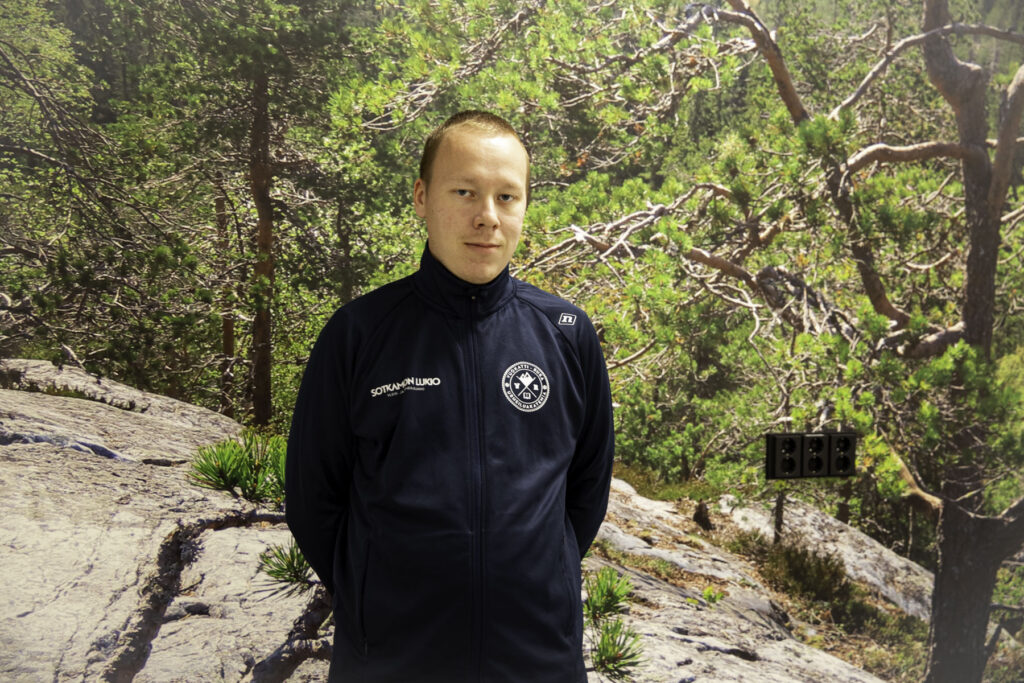
Joni Korhonen, a coach at the Vuokatti-Ruka Sports Academy, explains that a coach’s work may have begun weeks before practice, with the preparation of up-to-date maps and the planning of courses.
But there’s more to coaching than that.
“A coach’s most important task is to help the orienteer learn to understand their own performance. This starts with listening and asking the right questions. It’s important to learn to understand how an athlete thinks and to identify their strengths, so that while maintaining those strengths, we can also focus on developing areas for improvement.”
Korhonen also believes it’s important to be present in the athletes’ daily lives, to check in with them, and to help them balance their school and athletic routines.
Coach’s Day is a time to thank coaches
It is estimated that there are about 80,000 sports coaches in Finland. Some coaches do this as a profession, but the vast majority work on a volunteer basis. Coaches have a huge impact on the lives of athletes and on our society as a whole. Coaches deserve our thanks every day, but Coach’s Day on September 25 is a particularly good day to show our appreciation.
A coach’s work is often overshadowed by results and competitive performances. On Coach’s Day, it’s a good idea to pause for a moment to recognize this important driving force—and thank the coach.
However, athletes don’t always express their gratitude directly to their coaches.
“Young people have certainly found ways, both in everyday life and on social media, to let me know that the work I do hasn’t been entirely insignificant to them,” Korhonen says with a chuckle.
Korhonen also points out that not every coach has to fit into the same mold:
“Different coaches have different areas of strength, and even small gestures can mean a lot to young people. Sometimes the most important thing is simply to stop, ask how they’re doing, and actually listen to the answer.”
Text and photo: Hannele Hyvärinen