Patience Is a Virtue in the Night Forest and at the Negotiating Table
“It is not worth planning the finishing straight celebration at the first control.”
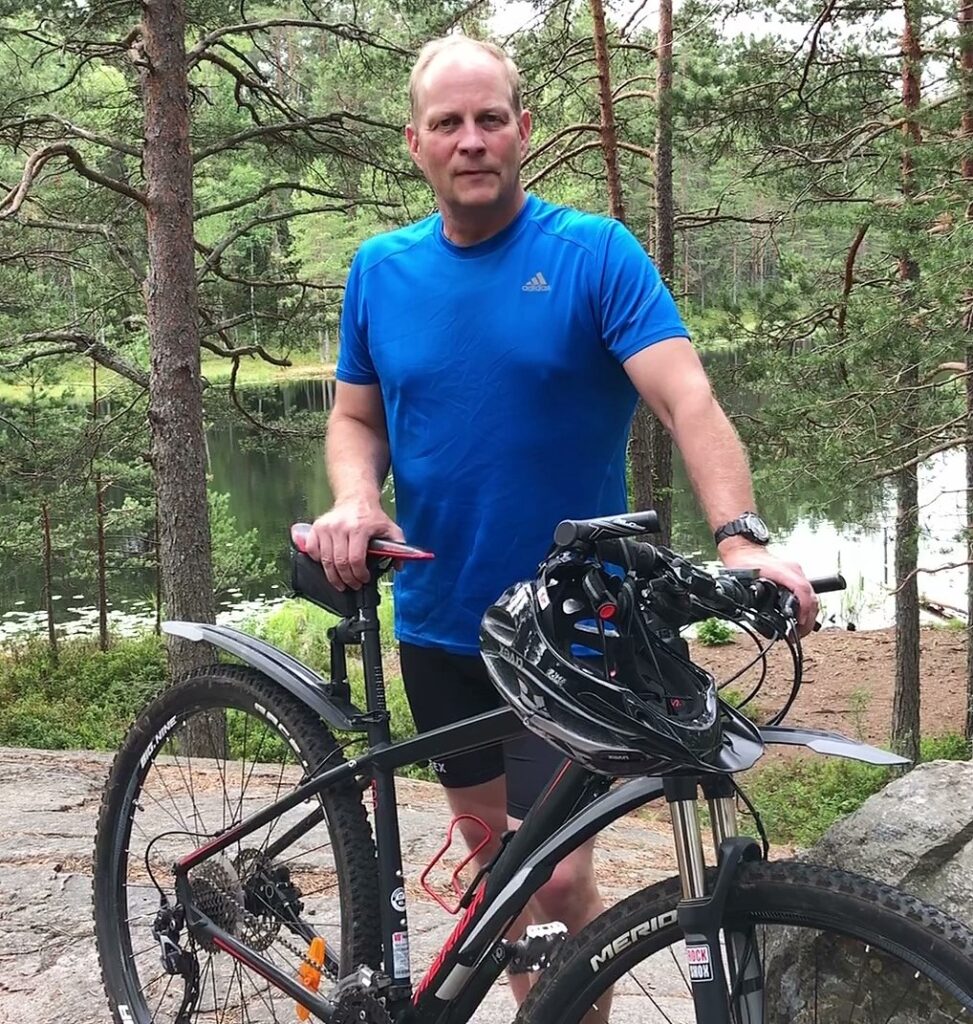
Stefan Borgman, Chair of the Board of METO, the advocacy organization for forestry professionals and experts, believes in the power of sports also at the checkpoints of working life.
“For me, orienteering has been a good bridge to getting conversations started about work-related matters. Especially in the forestry sector, it works well,” says the ski orienteering world champion.
Under Borgman’s leadership, METO negotiates around 30 collective agreements with employers in the forestry sector.
“The networks formed through orienteering help you get moving naturally in those circles,” Borgman says.
Recently, the advocate has been kept busy by next spring’s parliamentary elections.
“We have gone through all the political parties regarding bioeconomy issues. In those circles as well, there are many who have been involved in the sport or are interested in it.”
According to Borgman, attitudes toward sports in working life have changed significantly over recent decades.
“There was a time when one did not dare to emphasize an athletic career very strongly. Today, leadership takes examples from the operating methods of sports.”
Orienteering and the Jukola relays have taught Borgman many skills that have also been useful at the negotiating table.
“In neither case is it worth thinking about the finishing straight at the first control. One must focus on one’s own performance and proceed one control at a time or complete one issue at a time.”
Orienteering involves continuous route choice and decision-making among several alternatives. The same applies when seeking a solution that satisfies all parties.
“In both orienteering and negotiation, one must always have several alternatives and backup plans. You never know what will happen next.”
An experienced lobbyist knows that one must always also be ready to react quickly.
“There is no point in thinking too much in advance. New questions will certainly arise. Then one must focus on finding solutions.”
World Championship in Ski Orienteering
he greatest achievement of Borgman’s own athletic career is the 1992 World Championship in ski orienteering.
At the World Championships in Pontarlier, the relay was started by Eero Haapasalmi, Borgman skied the second leg, Anssi Juutilainen the third, and Vesa Mäkipää the anchor leg.
Snowless forest terrain has also become very familiar to Borgman.
“I remember my first Jukola very well. It was the muddy mess in Kytäjä in 1981,” Borgman laughs.
As an orienteer, Borgman has participated in Jukola representing his club (IF Sibbo-Vargarna), workplace, and most recently his own family team. He will miss Kotka Jukola for a good reason.
“We are not able to put together a family team this time because of an addition to the next generation’s family.”
Intermediate Time Service in the Old Days
IF Sibbo-Vargarna organized the Jukola Relay in 1995, at a time before today’s timing technology.
“I worked with intermediate times. The men were out in the terrain and the times were delivered by radio phones to the competition center, where they were entered into a computer and passed on to the announcer. Sometimes some times never even arrived.”
The competition terrain used then is now part of Sipoonkorpi National Park. The competition center was located only a couple of kilometers from Borgman’s current home.
The traces of the competition quickly disappeared into overgrowth, but it may be that citizens still benefit from some of the paths created back then.
Negotiation Skills Needed at the Inquiry Desk
Most recently, Borgman was involved in Jukola volunteer work in 2023 in Porvoo. Borgman was responsible for the operations of the Inquiry Desk
“I visited Mynämäki the year before to learn, and in 2024 I was still supporting the event in Kauhava.”
At the Inquiry Desk, the grounds for an athlete’s disqualification are reviewed together with the orienteer. In a situation where the athlete experiences disappointment alongside guilt over ruining the entire team’s performance, even an experienced negotiator is required to show patience.
“The longest discussion concerned the performance of a relatively young Swedish competitor. It took 45 minutes and the team manager had to come over before the matter was resolved.”
According to Borgman, elite athletes remember the course of the competition accurately and generally recognize their mistakes.
“It is always a difficult moment to tell a disappointed athlete that, sorry, this is just how it went.”
For those coming to Kotka Jukola, Borgman has an important reminder for everyone.
“The control card slip is the final opportunity to prove that you visited the controls.”
For the seventh anchor leg of the article series Life in the Forests of Jukola, Borgman challenges Jarmo Reiman.